
WASHINGTON, September 27, 2026 (DAILYNWZ) — The Trump administration is set to finalize a major rollback of US vehicle fuel economy standards through 2031, lowering the efficiency requirements for automakers in a move expected to reduce upfront vehicle costs while increasing fuel use and carbon dioxide emissions, according to government officials.
President Donald Trump said he had approved the new standards for cars and trucks and that they would make new vehicles cheaper. Transportation Secretary Sean Duffy called the measure “a major victory for America’s auto workers” ahead of Monday’s expected announcement.
The Transportation Department has proposed setting the average fleetwide fuel economy requirement at 34.5 miles per gallon (14.7 km per liter) by 2031, sharply below the 50.4 mpg (21.4 km per liter) target established under President Joe Biden.
The department estimates that the lower requirements would reduce the average cost of a new vehicle by $930. At the same time, its own analysis projects roughly 100 billion additional gallons of fuel consumption through 2050, an additional $185 billion in fuel spending and a roughly 5% increase in carbon dioxide emissions.
The shift reverses the direction of Biden-era policy, which sought to push automakers toward more fuel-efficient vehicles, including electric models. Biden’s administration increased required fuel efficiency for cars by 8% annually for model years 2024 and 2025, 10% in 2026 and 2% annually from 2027 through 2031.
The Trump administration proposed in December to revise the 2022 model-year standard downward retroactively, then increase requirements by between 0.25% and 0.5% annually through 2031. The National Highway Traffic Safety Administration has said its proposal would produce a fleetwide average of about 34.5 mpg in 2031.
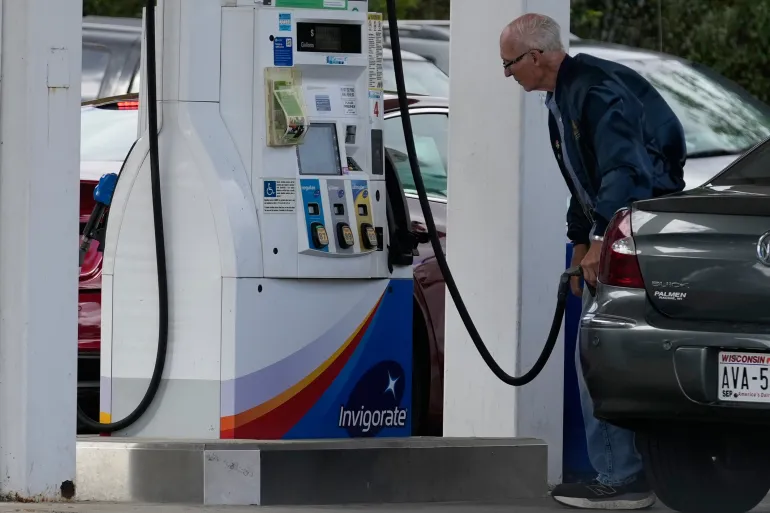
The policy comes as US motorists face sharply higher fuel prices following the start of the US-Israeli war with Iran at the end of February, according to the source.
The rollback is likely to give automakers more room to sell vehicles with lower fuel efficiency. Pete Buttigieg, who served as transportation secretary under Biden, criticized the move, saying it would “hand the clean tech future to China” and leave Americans paying more at the pump.
The Biden administration had framed tighter fuel economy rules as part of a broader effort to reduce greenhouse gas emissions and fossil fuel use while accelerating the US transition toward cleaner energy and strengthening its position in clean-energy technology and manufacturing.
NHTSA’s 2024 final rules had projected an average light-duty vehicle fuel economy of about 50.4 mpg by 2031.