
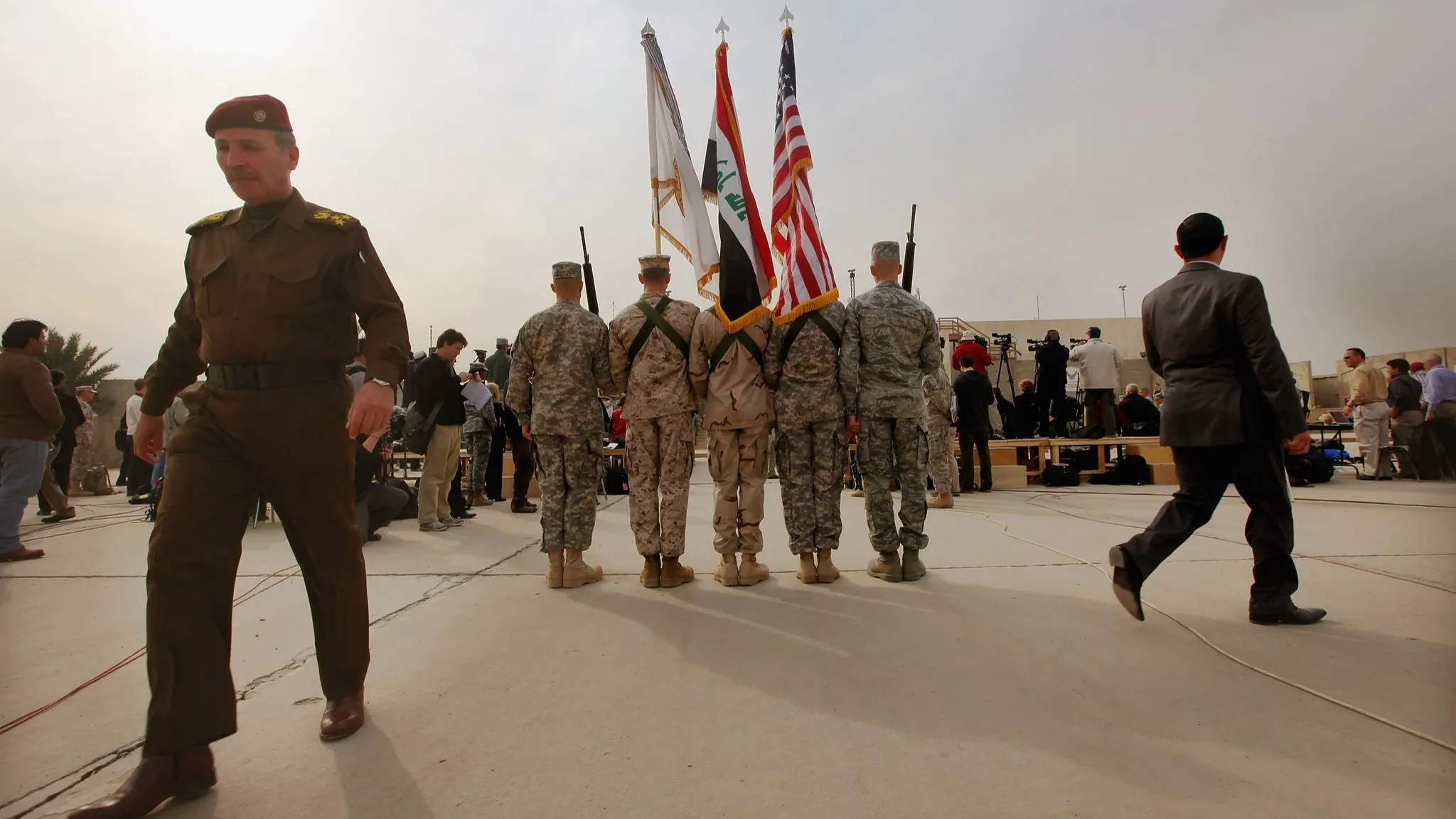
BAGHDAD, September 29, 2026 (DAILYNWZ) — US forces are preparing to leave their remaining bases in Iraq by Wednesday after more than two decades of war, a withdrawal that Iranian allies are celebrating as a victory but Iraqi security officials warn could create space for both Iran-backed groups and Islamic State militants.
The departure was agreed in 2024 under then-President Joe Biden and is being completed by President Donald Trump’s administration even as Washington is fighting Iran in a wider regional conflict. About 4,500 Americans have been killed during more than two decades of US military operations in Iraq.
Jasim al-Bahadli, an Iraqi security analyst specializing in Iran-aligned Shi’ite armed groups, said the withdrawal removes a US military presence that had served as a counterweight to Tehran.
“Iran stands to benefit strategically from the coalition’s departure,” he said, predicting that pro-Iranian militias would seek to turn the withdrawal into greater influence over Iraq’s security and political decision-making.
Abu Mojtaba al-Yasiri, a commander in the Islamic Resistance in Iraq, an umbrella group of Iran-backed armed factions, called the departure “a historic victory” and “a crushing defeat for the American project.”
“On September 30, we will celebrate the turning of a black page in Iraq’s history,” he told Reuters, saying Iraq’s sovereignty should be secured by its own people rather than foreign forces.
But some Iraqis fear the country is not yet prepared to assume full responsibility for security.
“We believe Iraq is still not fully ready to take over the security file at this time,” said Abdulrahman al-Zobaie, a Sunni tribal leader in Fallujah, once a center of resistance to the US occupation. He said Iraqis wanted full sovereignty but feared that the withdrawal could create a security vacuum.
The United States invaded Iraq in 2003 to overthrow Saddam Hussein and remained until the end of 2011. It returned less than three years later to help Iraqi forces defeat Islamic State, which had seized large areas of the country during a major conflict from 2014 to 2017.
Iraq has since maintained unusually close political and military ties with both Washington and Tehran, while at times becoming a battleground between them. The United States killed Iranian commander Qasem Soleimani in a 2020 strike near Baghdad airport, while Iran-backed groups repeatedly attacked US bases and drew American retaliation.
During this year’s war with Iran, seven of the 18 US service members listed as killed were in Iraq.
Iran has portrayed the US departure as a victory for its regional network of allied armed groups. Amir Hayat Moqaddam, deputy chairman of Iran’s parliamentary National Security Commission, said lasting security would prevail once American forces leave Iraq and the wider region.
The withdrawal is also raising concerns about Islamic State. Iraqi and Kurdish officials say the militant group retains sleeper cells despite losing its territorial stronghold nearly a decade ago.
Kurdish commander Sirwan Barzani said the loss of US intelligence, logistical support and drones could help the group regroup. Iraqi security forces also said they had uncovered a suspected Islamic State plot to carry out suicide attacks around the withdrawal.
“Islamic State is seeking to send a message that the group is still powerful and capable of launching bloody attacks,” said Colonel Khalid al-Bayati, a senior security official in Kirkuk.