
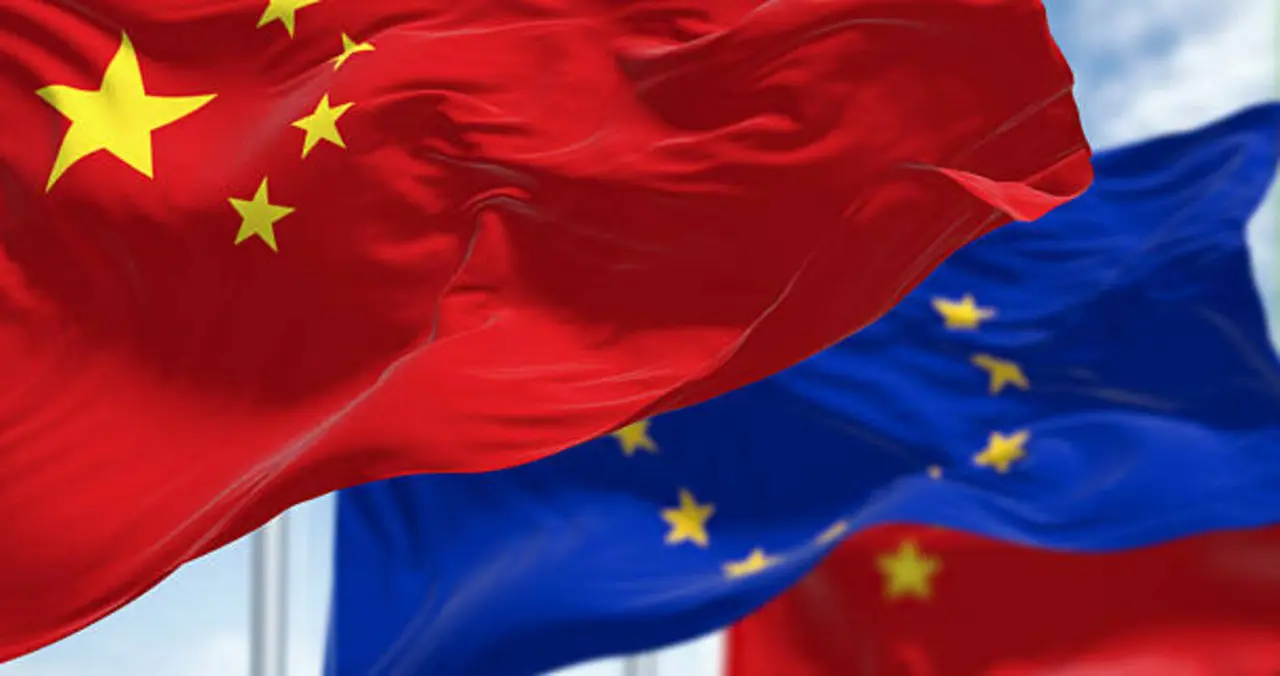
DUBLIN, October 23, 2026 (DAILYNWZ) — The European Union wants to expand trade talks with Beijing beyond cars to chemicals, machinery and other sectors as it seeks to contain a growing trade deficit with China, EU ministers said on Friday, with safeguards on plastics emerging as a possible next step.
The bloc is weighing ways to curb imports while preserving the benefits of relatively cheap Chinese goods for European consumers. Its goods trade deficit with China exceeded €370 billion ($414.25 billion) in 2025 and is on course to surpass €400 billion this year, or more than €1 billion a day. European Commission President Ursula von der Leyen has called the imbalance “unsustainable”.
Irish Foreign Minister Helen McEntee said EU member states wanted the European Commission to keep engaging with Beijing after Trade Commissioner Maros Sefcovic agreed earlier this month on a plan to cut imports of hybrid vehicles from China by more than half.
“There’s a very clear desire for us to move beyond that (hybrid cars) and to look at other areas, chemicals, machinery,” McEntee told a news conference following a meeting of EU ministers in Dublin. She also cited concerns in the agri-food sector and other areas.
Dialogue remains the priority, she said, but the Commission could also use existing trade defence tools to address some market imbalances.
Sefcovic said he had heard trade ministers’ views on which industries should be prioritised for further action. The plastics sector appeared closest to a formal investigation.
“Currently, I think the plastics sector is the closest,” he said, adding that officials were checking whether all the conditions for launching an investigation had been met.
The potential move appears to concern imports of polyethylene terephthalate, or PET, a plastic widely used in packaging. Lawyers told Reuters earlier this month that a request for measures to curb such imports had been submitted.
The debate reflects a wider clash over China’s export surge, dubbed “China Shock 2.0” by European industry. China needs overseas buyers for goods its domestic consumers cannot absorb, while European policymakers are divided between the lower costs those imports can offer and the need to protect local manufacturing.
European industry says the influx is already contributing to factory closures and job losses. Volkswagen is among the companies facing major job cuts, with 100,000 positions set to go, according to the source report.
China has previously rejected the idea that it is responsible for the EU’s economic difficulties, saying instead that it is a partner in resolving them.
Von der Leyen said this week that concerns were growing over chemicals and machinery. Lithuania’s Foreign Minister Kestutis Budrys said on Friday that pharmaceuticals could also come under scrutiny.
France’s junior trade minister, Nicolas Forissier, said dialogue had become possible because the EU was presenting a more united position. Chinese authorities, he said, “understand when you are clear, when you speak frankly, when you are firm on your positions.”