
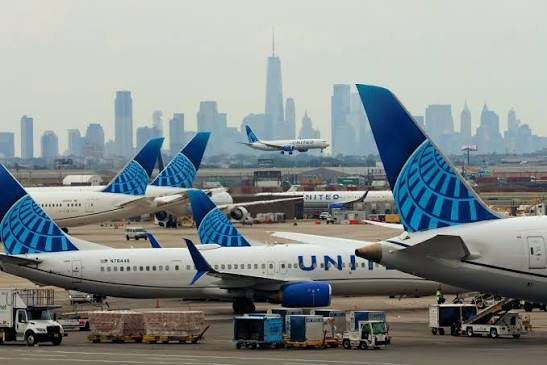
CHICAGO, October 25, 2026 (DAILYNWZ) — US airlines are choosing to charge more rather than fill every seat with discounted tickets, seeking to protect profit margins as soaring jet fuel prices erode earnings despite strong revenue growth.
The strategy has helped carriers generate substantially more passenger revenue even as fares rise sharply. But fuel costs have climbed about 90% since the US-Israeli war on Iran began in February, prompting several major airlines to lower their earnings forecasts.
Executives at Delta Air Lines, United Airlines, American Airlines, Southwest Airlines and Alaska Air Group have all stressed the need to protect margins rather than maximize passenger numbers. The approach, however, faces a tougher test in 2027, when airlines plan to expand domestic capacity and could intensify competition for travelers.
“If fuel stays elevated, we have to continue to push yield up so that we can make a bit of money,” American Airlines Chief Financial Officer Devon May told Reuters on Thursday. Yield measures the revenue an airline earns for each mile flown by a passenger.
Six major US carriers plan to increase domestic capacity by 3% in the fourth quarter compared with a year earlier, accelerating to 3.8% in the first quarter of 2027. That compares with growth of just 0.2% in the third quarter, according to Airlines for America, citing Cirium data.
Fares have already risen well ahead of broader inflation. US airfares increased by nearly 23% on average year-on-year in the seven months through September, compared with a 3.6% rise in overall consumer prices, Labor Department data showed.
Airlines are still pushing prices higher. JetBlue Airways introduced a $10 increase in one-way domestic fares on Wednesday, according to JPMorgan, following a similar increase led by United the previous week and subsequently matched by Southwest.
The shift reflects a growing willingness to accept slightly emptier planes rather than offer discounts. United’s leisure load factor — the share of available seats occupied — fell 1.3 percentage points in the third quarter. The airline’s commercial chief, Andrew Nocella, acknowledged some passenger sensitivity to higher fares but described the trade-off as one the company would make every day.
American also flew with lower occupancy in the quarter, while passenger yields rose more than 18%. Delta Chief Executive Ed Bastian said the airline had been managing its business with margins in mind.
Across the five carriers, passenger revenue rose nearly $8.8 billion, or 18%, in the third quarter from a year earlier, while passenger traffic increased by less than 1%. Premium products and changes in passenger mix also contributed to the revenue gains.
Yet traffic remains a concern. The Transportation Security Administration screened 2.9% fewer people at US airports during the quarter than a year earlier. Limited capacity growth and the shutdown of budget carrier Spirit Airlines also weighed on passenger numbers, making it difficult to determine how much higher fares may be discouraging travel.
Southwest Chief Executive Bob Jordan said higher prices had not eroded passenger volumes, after the airline reported an almost 22% increase in average fares during the first nine months of the year.
Fuel costs remain the central pressure. Gulf Coast spot jet fuel prices rose from $2.43 a gallon before the war began in February to $4.63 on October 20, according to the US Energy Information Administration. Delta and Southwest have cut their annual earnings forecasts, while American expects to post a full-year loss despite sharply higher passenger revenue.
Carriers are now reassessing expansion plans. American intends to slow growth considerably next year, while Southwest says it will not pursue expansion at the expense of profitability. United executives have also warned that published capacity plans for 2027 may not materialize.
Restraining capacity could help sustain fares, but flying less can increase costs per seat. Further price increases also risk putting off travelers who have already absorbed steep rises.
Despite those risks, American’s May said the gains in passenger yield remained durable. “We think these yield gains are very sustainable,” he said.