
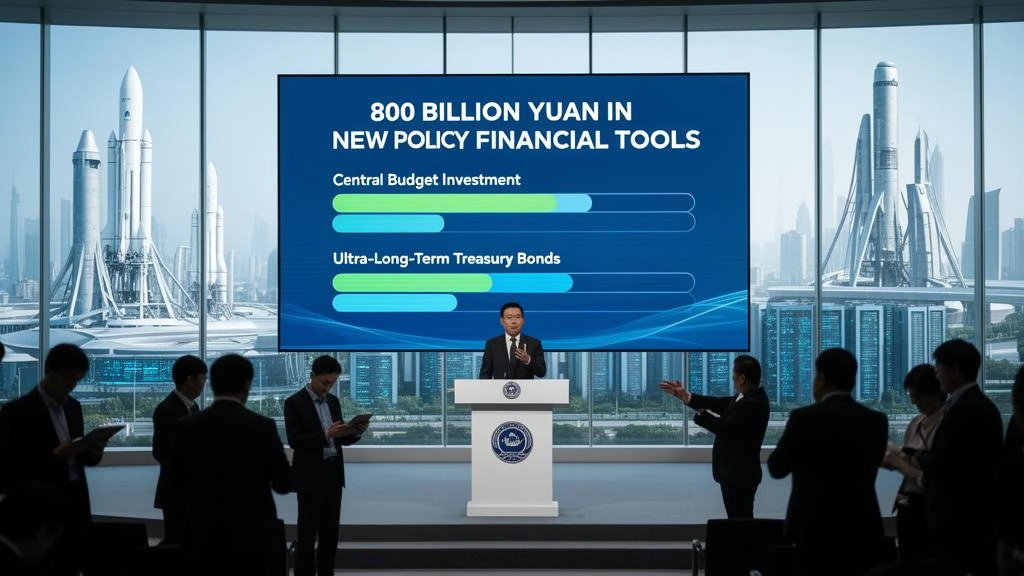
BEIJING, October 28, 2026 (DAILYNWZ) — China has completed the allocation of 800 billion yuan ($119 billion) through policy-based financial instruments to support major projects, boost investment and attract private capital, with artificial intelligence, the digital economy and urban renewal among the main priorities.
The three state-owned policy banks responsible for distributing the funds said on Wednesday that the entire allocation for 2026 had been committed to projects, with the financing intended to ease capital shortages and mobilize additional bank lending and private investment.
The China Development Bank allocated 365 billion yuan to projects with a combined investment value of 5.5 trillion yuan. The Export-Import Bank of China distributed 120 billion yuan, supporting projects expected to mobilize more than 1.7 trillion yuan in investment. The Agricultural Development Bank of China allocated 315 billion yuan to projects with a total investment of about 4.39 trillion yuan.
The instruments were first introduced in 2025 with an allocation of 500 billion yuan. The government raised the amount to 800 billion yuan for 2026, as outlined in this year’s government work report, to expand effective investment and encourage greater participation by private investors.
“AI And Digital Economy Attract Major Funding”
Artificial intelligence and the digital economy accounted for a substantial share of the financing, alongside green development, biomedicine and consumption-related projects.
The China Development Bank allocated 179.01 billion yuan to projects covering AI, the digital economy, green and low-carbon development, biomedicine and consumption.
The Export-Import Bank of China supported more than 220 projects in emerging sectors, including AI and the digital economy, with lending to these areas accounting for nearly half of its total allocation.
The Agricultural Development Bank of China backed almost 2,000 projects spanning AI, the digital economy, the low-altitude economy, consumption and green and low-carbon development. Financing for these projects approached 200 billion yuan.
The wider program also targets consumer infrastructure and urban renewal, including transport networks, energy systems and upgrades to underground pipelines.
“Private Capital And Infrastructure In Focus”
The policy banks also directed substantial funding towards projects involving private investment. The China Development Bank allocated 127.99 billion yuan to projects involving private investment or private capital.
The Export-Import Bank of China supported more than 210 such projects, representing almost 40% of its total allocation. The Agricultural Development Bank of China backed nearly 400 projects involving private capital, with funding exceeding 65 billion yuan.
All 800 billion yuan was used to supplement project capital, helping address funding gaps, strengthen projects’ financing capacity and attract additional resources from banks and private investors.
The three lenders said they would improve post-investment oversight, provide supporting loans and accelerate the conversion of allocated funds into completed physical work to maximize the program’s impact.
Wen Bin, chief economist at China Minsheng Bank, said the financing, combined with major infrastructure projects and urban renewal initiatives, could stimulate demand for electronic information products, electrical machinery, high-end equipment and certain raw materials.
The scale of the allocation underscores Beijing’s use of policy-directed financing to support investment across strategic industries and infrastructure, while seeking to draw more private capital into major development projects.