
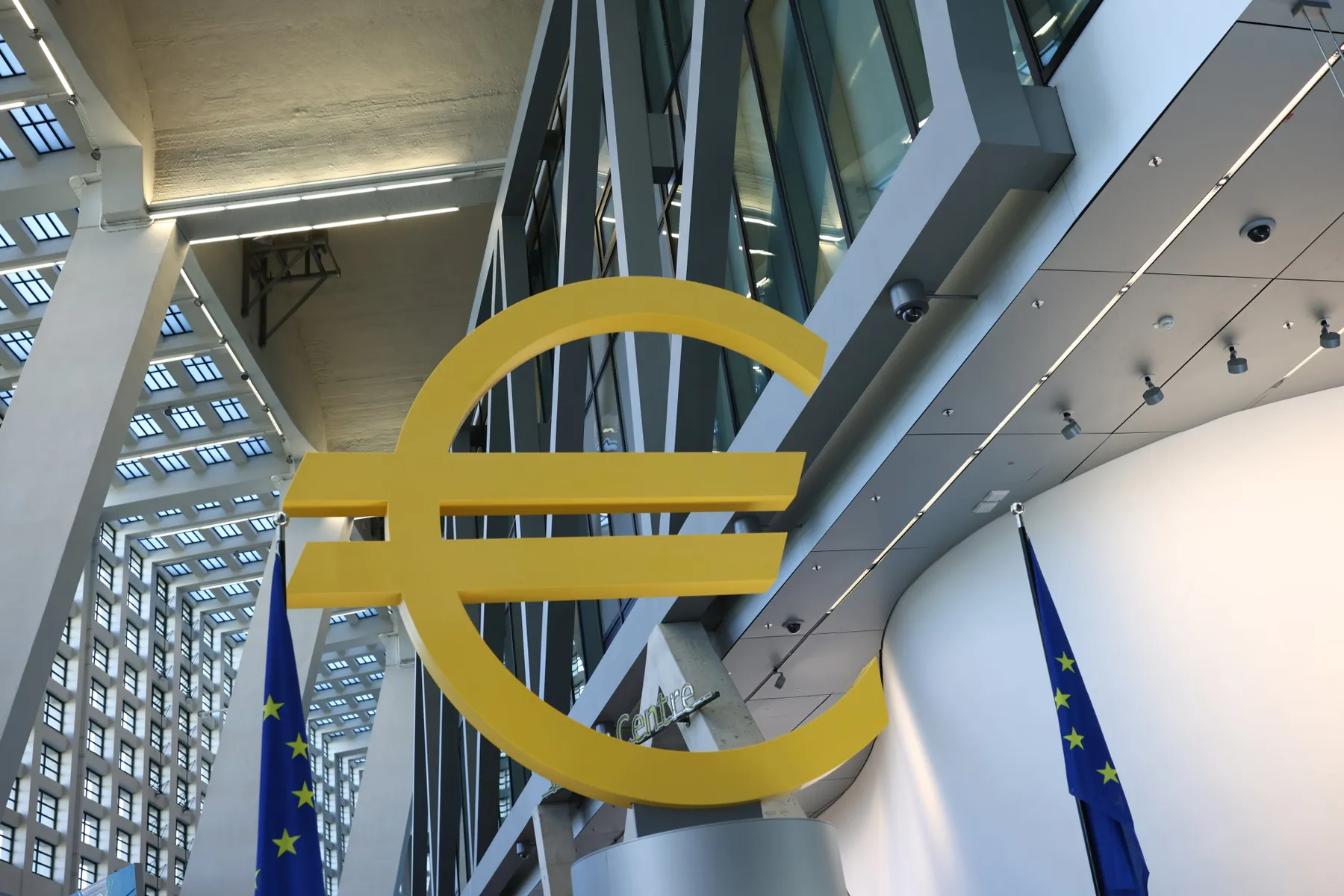
SINGAPORE, October 05, 2026 (DAILYNWZ) — The euro fell to a 17-month low on Monday as investor concerns over France’s debt and political gridlock weighed on European assets, while Brazilian markets rallied after right-wing Senator Flavio Bolsonaro exceeded expectations in the first round of the presidential election.
The euro recovered to $1.1202 after earlier dropping 0.8% to $1.1160, its lowest level in 17 months. The currency fell about 2.5% in September as investors focused on France’s deteriorating public finances and political uncertainty ahead of next year’s presidential election.
The premium investors demand to hold French 10-year government bonds over German debt, a key gauge of perceived risk, rose above 150 basis points on Friday. French 10-year yields were last at 4.8642%, below Friday’s 4.993% peak.
“France is the real deal in terms of risk premia for the euro,” said Neil Wilson, a strategist at Saxo. He said government plans to reduce the budget deficit still faced parliamentary scrutiny and could ultimately be weakened.
European stocks were mixed. The STOXX 600 rose 0.5% by 1135 GMT, while French shares fell to six-month lows and euro zone blue-chip stocks were broadly unchanged. Spanish stocks were more resilient, with Madrid’s benchmark up 0.4% after Prime Minister Pedro Sanchez called an early election next month.
Anthilia portfolio manager Giuseppe Sersale said investors were largely waiting for direction from Wall Street, with Chinese markets closed for a holiday and little U.S. economic data scheduled.
“For now we are nervous but not excessively negative,” Sersale said.
Brazil was a different story. An exchange-traded fund tracking Brazilian stocks jumped 15% in Frankfurt, while the Brazilian real was poised to strengthen against the dollar after Flavio Bolsonaro advanced to a runoff against leftist incumbent Luiz Inacio Lula da Silva.
The result raised hopes among investors for a more business-friendly policy agenda, supporting Brazilian assets.
Broader markets also drew support from changing expectations for U.S. monetary policy. Investors now see an 18% chance of a Federal Reserve rate increase this month, down sharply from 64% a week earlier, according to CME FedWatch data. A December increase remains largely priced in.
The shift followed weaker-than-expected U.S. labor data showing slower job growth in September and sharp downward revisions to payrolls for the previous two months.
Japan’s Nikkei rose 2.4%, while MSCI’s broadest index of Asia-Pacific shares outside Japan gained 1.2%. U.S. stock futures pointed slightly lower, with both S&P 500 and Nasdaq futures down 0.1%.
The dollar index rose 0.3% to 102.217, while sterling slipped 0.2% to $1.3219 and the yen was little changed at 157.93 per dollar.
Oil prices were mixed as concerns over possible supply disruptions linked to the U.S.-Israeli conflict with Iran offset rising Middle East exports and a G7 pledge to increase supplies. Brent rose 0.3% to $102.59 a barrel, while U.S. crude fell 0.6% to $90.53. Spot gold gained 0.4% to $4,160.30 an ounce.