
SYDNEY, September 28, 2026 (DAILYNWZ) — Asian stocks started the week cautiously as renewed gains in oil prices and rising bond yields unsettled markets, with investors weighing doubts over a near-term truce between the United States and Iran against a run of stronger-than-expected economic data.
Brent crude futures jumped 1.6% to $106 a barrel, taking their gains for September to 17%, while U.S. crude rose 1.1% to $93.47. The latest move came after U.S. President Donald Trump rejected an Iranian proposal to reopen the Strait of Hormuz, saying Tehran was desperate for a deal, although he said talks would continue this week.
Iran has shown no sign of softening its proposals, leaving markets focused on the risk that elevated energy costs could persist.
A shortage of refining capacity has pushed diesel prices to record levels well above crude prices, raising concerns that higher energy costs could become embedded in consumer prices and wage demands.
That pressure is already feeding into expectations for tighter monetary policy. The Reserve Bank of Australia is widely expected to raise rates when it meets Tuesday, while markets are pricing in a 66% probability of a second consecutive Federal Reserve rate increase in October. They also imply roughly 90 basis points of additional tightening through the end of next year.
Yet the picture for growth remains comparatively strong. Robust U.S. economic data have supported expectations for corporate earnings even as borrowing costs rise, while economic activity in Asia and Europe has also held up, helped in part by heavy investment in artificial intelligence.
The Atlanta Federal Reserve’s GDPNow model currently points to annualized U.S. growth of 5% for the quarter.
“The global expansion appears to have entered a phase of broad-based strength rarely seen over the past two decades,” said Bruce Kasman, chief economist at JPMorgan.
Against that backdrop, longer-term borrowing costs continued to climb. The yield on 30-year U.S. Treasury bonds rose to 5.5185%, close to its highest level since 2004, after gaining 27 basis points this month. Two-year yields have risen 55 basis points as investors have increased bets on further Federal Reserve tightening.
Mark Cabana, a rates strategist at Bank of America, said bond prices could face further pressure as markets adjust to higher expectations for the federal funds rate.
“The repricing may not stop until there’s clear evidence that financial conditions have become sufficiently restrictive,” he said.
Higher yields are particularly significant for technology companies borrowing heavily to finance artificial-intelligence expansion, while also reducing the present value investors assign to future corporate earnings.
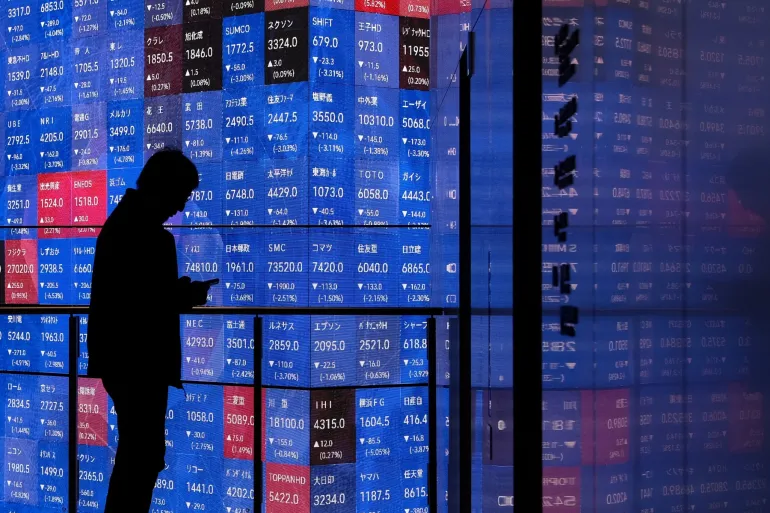
Japan’s Nikkei rose 0.8%, while South Korean shares fell 0.6%. MSCI’s broadest index of Asia-Pacific shares outside Japan slipped 0.2%.
European equity futures were modestly higher, while S&P 500 futures fell 0.2% and Nasdaq futures were little changed.
Markets now turn to a crowded U.S. economic calendar covering inflation, gross domestic product, manufacturing and employment. Friday’s payrolls report is expected to show 85,000 new jobs, with unemployment forecast at 4.1%, although a reading of 4% remains possible.
The stronger economic data have helped lift the dollar index to a two-month high of 101.39. The euro fell to $1.1380 and is down 2% this month, while the dollar rose to 157.53 yen.
Gold, which does not pay interest, fell 0.5% to $4,262 an ounce and has lost more than 4% this month as bond yields have climbed.