
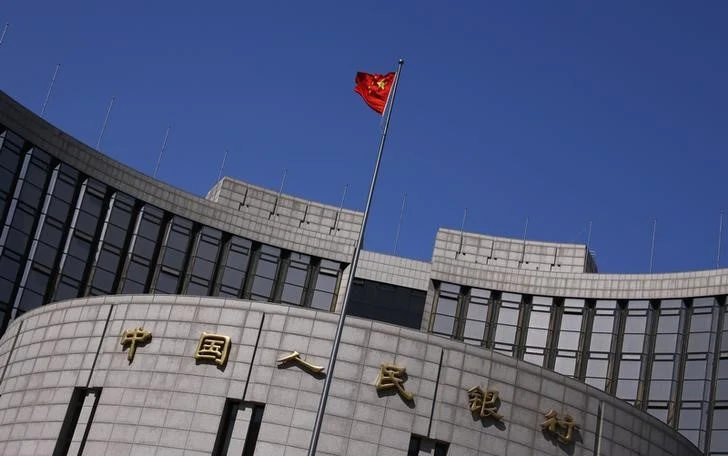
BEIJING, October 20, 2026 (DAILYNWZ) — China kept its benchmark lending rates unchanged for a 17th consecutive month on Tuesday, as stronger-than-expected economic growth eased pressure on policymakers to deliver further monetary stimulus in the near term.
The People’s Bank of China (PBOC) maintained the one-year loan prime rate (LPR), which guides most new corporate and household loans, at 3.00%. The five-year LPR, used notably to price mortgages, remained at 3.50%. Both decisions were in line with market expectations.
The move follows data showing that China’s gross domestic product grew 4.5% year on year in the third quarter, accelerating from 4.3% in the previous three months and exceeding forecasts. The stronger performance has reduced expectations of an imminent monetary easing.
Alongside keeping borrowing benchmarks stable, the central bank is preparing changes to the framework used to set loan rates, aiming to improve the transmission of monetary policy to the wider economy.
PBOC Governor Pan Gongsheng said on Monday that the bank would issue guidance to broaden the benchmarks available for pricing loans, which are now largely tied to the LPR system.
One proposal would make the seven-day reverse repo rate — currently the central bank’s main policy rate — a more direct, overnight reference linked to money-market conditions.
Under the proposed approach, some financially sound companies could choose between that rate and the LPR when setting interest rates on floating-rate loans. The overnight benchmark could also be used to price bonds and financial derivatives.
The changes would give eligible borrowers more flexibility in determining financing costs while reshaping how central bank policy feeds through to market rates.
As more corporate loans become linked to the overnight rate, fluctuations in that benchmark could narrow, helping to stabilise liquidity conditions, according to the proposed framework.
The decision to hold rates steady leaves China’s main lending benchmarks unchanged despite continued efforts to support economic activity. For now, the latest growth figures have eased pressure for immediate rate cuts, while the planned changes point to a longer-term effort to improve the effectiveness of monetary policy.