
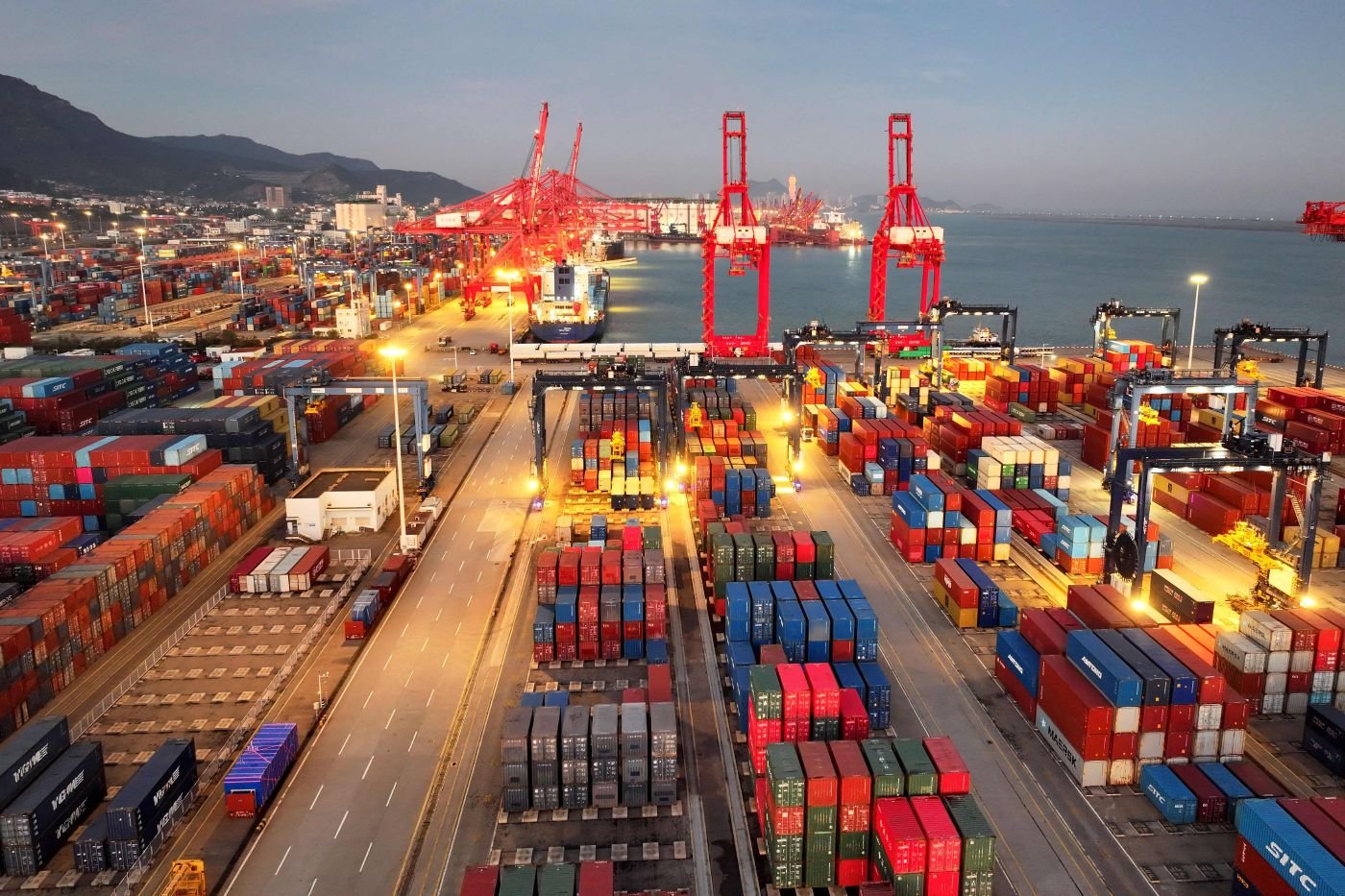
BEIJING, November 10, 2026 (DAILYNWZ) — China’s trade surplus exceeded $1 trillion in the first 10 months of 2026, as surging global demand for artificial intelligence (AI) infrastructure drove technology exports higher, reinforcing the economy’s dependence on overseas markets amid persistently weak domestic consumption.
The record imbalance comes ahead of next week’s Asia-Pacific Economic Cooperation (APEC) summit in Shenzhen, where Chinese President Xi Jinping and US President Donald Trump are expected to meet for the third time this year, bringing trade relations and tariff policies back into focus.
Exports jumped 35.2% year-on-year in October in US dollar terms, following a 36.3% increase in September and exceeding economists’ expectations of 33.5%, according to customs data released on Tuesday.
The strong performance pushed China’s trade surplus to $1.04 trillion between January and October. The country has now exceeded the $1 trillion threshold for a second consecutive year, reaching the milestone a month earlier than in 2025.
The widening surplus is likely to intensify trade friction with major partners, particularly the European Union, whose leaders have called for additional restrictions on Chinese imports. Beijing and Brussels recently agreed on arrangements to limit Chinese hybrid vehicle exports to the bloc over the coming years. As the measures have yet to take effect, manufacturers are expected to accelerate shipments in the near term.
“The risk of additional tariffs and other trade barriers will remain elevated in 2027, particularly as Chinese manufacturers continue expanding their presence in overseas markets,” said Joe Peissel, lead macroeconomist at Trivium China.
China’s trade surplus with the United States, meanwhile, narrowed slightly to $32.71 billion in October from $34.01 billion in September, although the broader trade imbalance remains a major source of tension between the world’s two largest economies.
Beijing and Washington formally extended their trade truce by two months on Monday, one day before it was due to expire. China said last week that any increase in purchases of US agricultural products would depend on the implementation of agreed reciprocal tariff reductions.
Imports Accelerate, Rare Earth Shipments Edge Higher
Imports also recorded stronger-than-expected growth, rising 41.6% in October from a year earlier, compared with a poll forecast of 32% and an increase of 31% in September.
Rare-earth exports edged higher from the previous month, while crude oil imports reached their highest level since March as Chinese buyers adjusted to supply disruptions in the Middle East.
“The contraction in rare-earth export volumes eased last month, suggesting that China may have begun to relax enforcement of some export controls,” said Nguyen Hoang Nam, China economist at Capital Economics. He said the development could reflect continued US pressure on Beijing to improve rare-earth supplies.
Domestic Weakness Raises Questions Over Growth
Despite the export boom, China’s domestic economy continues to face significant headwinds. A prolonged property downturn has weakened household wealth and confidence, keeping consumers reluctant to increase spending.
Weak demand has also pushed Chinese carmakers to seek growth overseas. Vehicle exports maintained strong growth in October, while domestic car sales recorded their 12th consecutive monthly decline, according to separate data from an industry association.
The growing reliance on foreign demand exposes China to potential slowdowns in global trade, particularly if the current AI investment cycle loses momentum.
For now, technology shipments remain a major source of support. Semiconductor exports surged 111.1% in value terms during the first 10 months, while overall high-tech exports increased 47.9%, customs figures showed.
“We may see trade growth moderate next year, given the base effect,” said Lynn Song, chief economist for Greater China at ING. However, he expects AI-related trade to remain strong in the coming months despite recent volatility in equity markets.
Chinese stocks showed little reaction to the trade figures, with the CSI300 and Shanghai Composite indexes each edging up 0.1% by Tuesday’s midday break.