
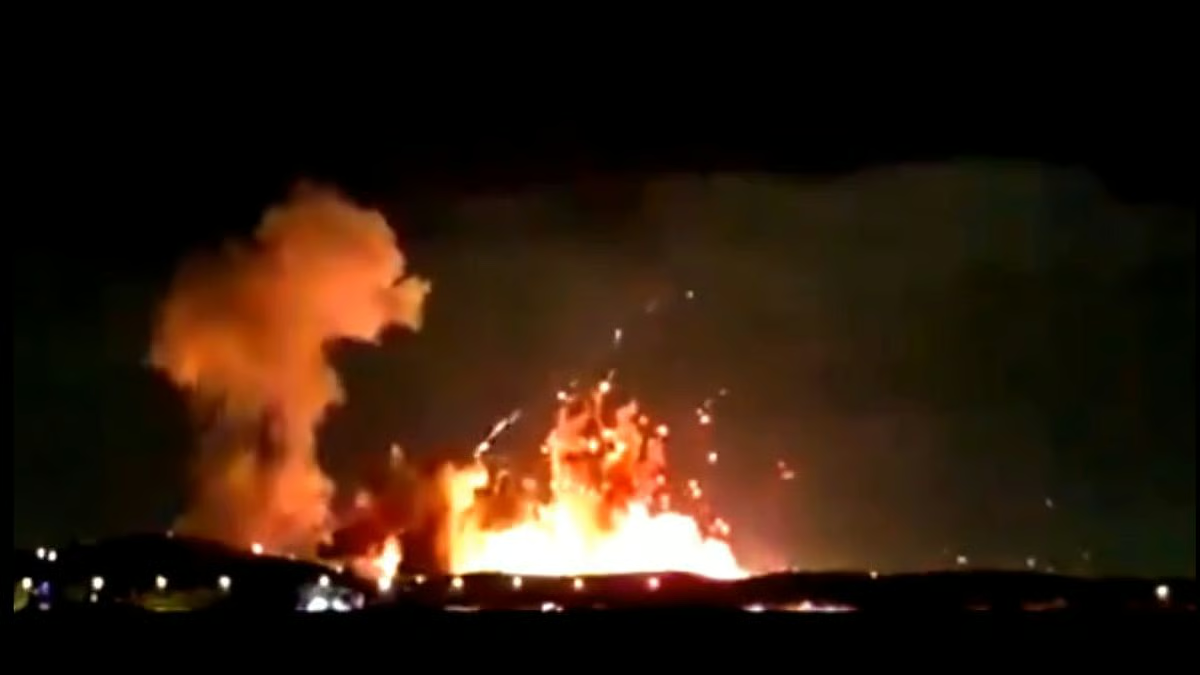
TEHRAN, November 08, 2026 (DAILYNWZ) — Explosions were reported in several areas of southern Iran, including Qeshm Island in the Strait of Hormuz, on Saturday evening, raising fresh questions about military activity in the strategic waterway amid escalating tensions between Tehran and Washington.
Iranian state television said the blasts could be linked to military activities by Iranian forces in the strait, which has been a flashpoint for repeated attacks on commercial shipping since the US-Iran war began in February.
However, Iranian authorities had not confirmed any missile strikes on the affected areas. The semi-official Tasnim news agency, citing an informed source, also said the explosions on Qeshm Island were not caused by missile strikes.
Earlier on Saturday, Tasnim had reported that two missiles struck the island, without providing official information about possible damage.
The uncertainty surrounding the explosions continued into Sunday, when Iran’s Revolutionary Guards Navy announced that two oil tankers had caught fire after hitting mines while attempting to navigate what it described as an “unauthorized route” through the Strait of Hormuz.
It was not immediately clear whether the tanker incidents were connected to the explosions reported in southern Iran.
Tehran has increasingly sought to enforce restrictions on maritime traffic through the strait, targeting vessels it accuses of violating its passage rules as it seeks to assert control over the strategic shipping corridor and increase pressure on Washington.
The latest reports come days after US forces carried out strikes on Qeshm Island. A US official described those operations as limited in scope and said they did not signal a return to major combat operations.
Tensions have also extended to maritime enforcement by Washington. The US military said on Saturday evening that its forces had disabled a commercial vessel attempting to breach the American blockade of Iran.
According to US Central Command, an American aircraft fired at the vessel’s stern, disabling it after it tried to pass through the blockade.
The developments have heightened uncertainty over whether the conflict could enter a new phase following the US midterm elections on Tuesday. Regional countries had been anticipating that President Donald Trump might resume strikes against Iran after holding off on further attacks in the weeks preceding the vote.
Tehran has repeatedly warned that any new attacks would trigger retaliation against US and Israeli targets in neighbouring countries, raising the risk of a broader regional confrontation.